
Birla Mandir (Lakshmi Narayan Temple) in Jaipur is an iconic modern Hindu temple built entirely of gleaming white marble. Commissioned by the Birla family and completed in 1988, it is dedicated to Lord Vishnu (Narayana) and Goddess Lakshmi, symbols of preservation and prosperity. This guide covers Birla Mandir Jaipur’s history and significance, striking architecture, visiting hours, dress code, travel tips, and nearby attractions, to help you plan an enriching visit.
History & Significance
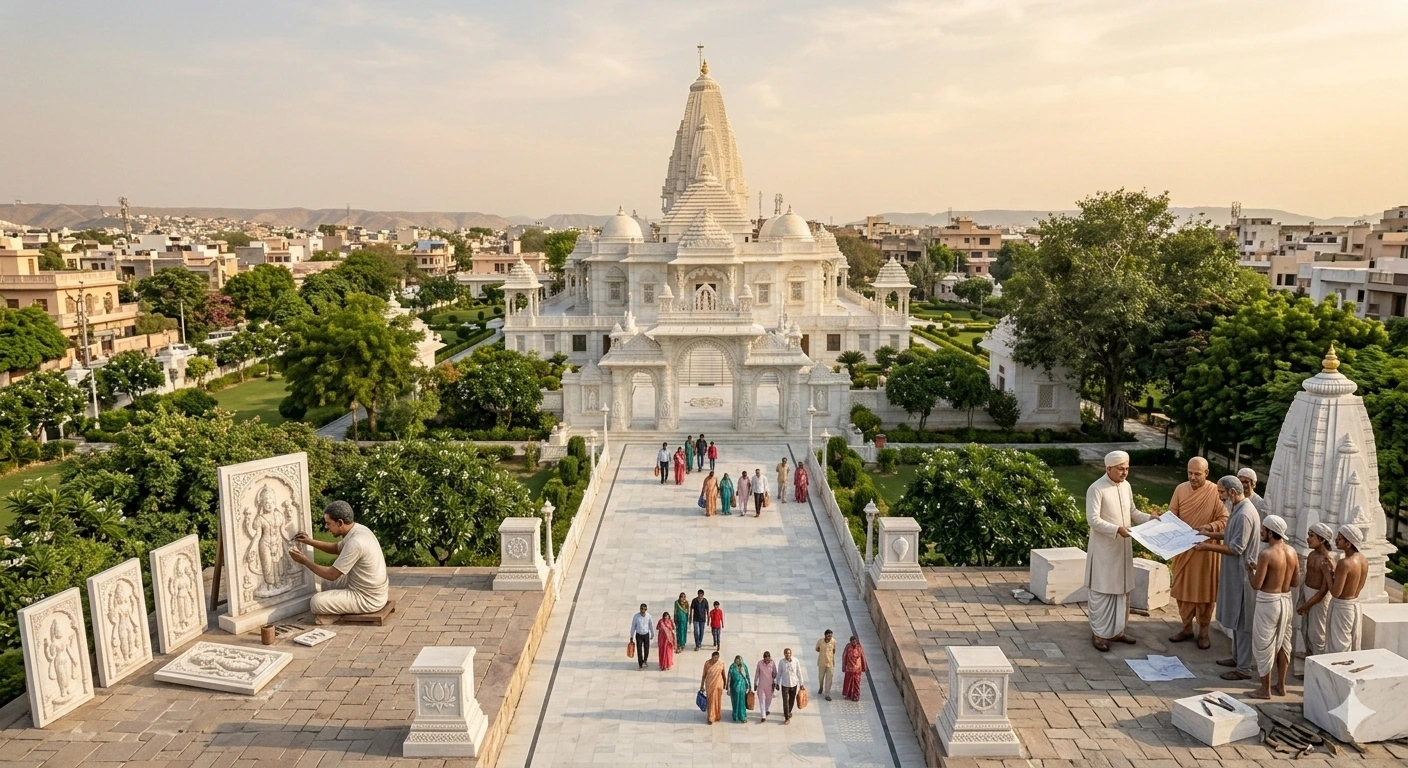
Birla Mandir was built by the Birla family (B.M. Birla Foundation) and consecrated in 1988. Tradition holds that the Maharaja of Jaipur sold the temple’s land to the Birlas for a token sum of one rupee. Though relatively new, the temple quickly became a major religious and cultural landmark in Jaipur.
It honors Lakshmi-Narayana (Goddess Lakshmi and Lord Vishnu), deities representing wealth and abundance. The temple’s dedication to these gods, along with its universal design elements, reflects a message of prosperity and interfaith harmony (its three domes pay tribute to Hinduism, Islam, and Christianity). Each year the site hosts festive aartis and celebrations, notably Diwali and Janmashtami, drawing devotees and tourists alike.
Also Explore: Elephant Sanctuary Tours
Architecture & Highlights
Birla Mandir’s architecture is a modern interpretation of traditional temple design. Entirely clad in Makrana white marble (the same stone used for the Taj Mahal), the temple stands on a raised platform at the base of Moti Dungri hill. Its exterior has intricate carvings and inlays: pillars and walls are covered with reliefs from Hindu scriptures, mythological scenes, and images of gods.
Unusually, the carvings also feature philosophers and saints from other traditions (Socrates, Buddha, Confucius, Christ, etc.) side-by-side with Hindu deities, underscoring the temple’s message of unity.
Three large domes tower over the sanctum, each symbolizing one of India’s main religions, a design choice meant to honor secular India. Above the entrance sits a Ganesha idol, acknowledging the Hindu custom of invoking Ganesh first.
Gold-colored inlays decorate the marble façade, and stained-glass windows along the sides depict scenes from Hindu mythology. Outside the main shrine is a smaller white-marble Shiva temple, showcasing yet another aspect of Hindu worship.
Inside the sanctum are the temple’s prized idols: life-sized, single-block marble statues of Lord Vishnu and Goddess Lakshmi, illuminated by natural light and glowing a soft translucent white. The inner hall’s dome and walls are richly carved and painted, and the ceilings show fine craftsmanship. Marble railings keep devotees at a respectful distance during worship.
The grounds of Birla Mandir are lush and well-kept. Green lawns, manicured gardens and reflection pools surround the temple. In the evenings, soft floodlights make the white domes and carvings look ethereal, with the temple appearing to glow against the night sky. A small gift shop on the premises sells idols and souvenirs, and there is a museum showcasing artifacts and photographs of the Birla family and the temple’s history.
Visiting Hours & Best Time to Visit
Timings: Birla Mandir is open daily in two sessions: mornings from 8:00 AM to 12:00 PM, and evenings from 4:00 PM to 9:00 PM. (Note: These hours can vary slightly, and the temple closes for a break in the afternoon.) Plan accordingly – arriving around noon would mean a wait for the evening session.
Entry Fee: Admission is free for all visitors.
Best Time: Jaipur can be extremely hot from April to June. The cooler months (October–March) are ideal for sightseeing, as the weather is mild. Birla Mandir is lovely year-round, but in summer you may want to visit early or late in the day.
Evenings are especially recommended: after 6:00 PM the temple lights come on, creating a warm glow on the marble, and the air is cooler. Many travelers note that the temple’s nighttime illumination and the evening aarti (devotional ceremony) make for a truly memorable visit. The Hindu festival Janmashtami (Krishna’s birth) in August/September is also celebrated here with decorations and special prayer services.
Dress Code & Etiquette
As an active Hindu temple, visitors should dress modestly and behave respectfully. Both men and women should cover shoulders and knees (no shorts, short skirts or sleeveless tops).
Remove your shoes before entering the inner sanctum there is a shoe rack by the entrance, and this is enforced politely but strictly. Leather items (belts, wallets, etc.) are traditionally avoided in the temple area. Inside, keep your voice low and mobile phones on silent. It is customary to bow or nod slightly (namaste) when approaching the main idols. Overall, treat the space as sacred – no smoking, eating or loud talking near the shrine.
Entry Fee & Photography Rules
Entrance to Birla Mandir is completely free. There is a donation box at the temple gate if you wish to offer a token.
Photography is allowed on the grounds, but cameras and phones are not permitted inside the inner sanctum. You can take pictures of the exterior, courtyard, gardens and the marble steps many visitors capture the reflection of the temple in the pool or its lit-up night view. However, please respect signs and staff instructions: do not photograph the deities or attempt flash photography indoors.
How to Reach Birla Mandir Jaipur
Birla Mandir is located in Tilak Nagar on Jawahar Lal Nehru Marg, at the base of the Moti Dungri hill in central Jaipur. The address is easily found on GPS maps. The temple is well-connected:
- By Bus/Auto: Jaipur city buses, auto-rickshaws and cycle-rickshaws can drop you at the temple gates. It’s only a few minutes’ ride from major city points like Jaipur Junction (railway station) or the airport.
- By Taxi/Car: If driving or taking a taxi, there is ample parking space just outside the temple. The nearby roads are usually not very crowded, even in rush hour.
- By Rail/Air: Jaipur Railway Station is about 5 km (3 mi) away, roughly a 15-minute drive. Jaipur International Airport is about 13 km (8 mi) south of the temple; from there taxis or app-based cabs can reach in ~30 minutes.
The temple is very central, so getting here from any Jaipur location is straightforward. Many Golden Triangle tour itineraries include Birla Mandir as a stop when heading to other Jaipur sights.
Nearby Attractions & Suggested Itineraries
Birla Mandir’s location makes it easy to combine with other sights in Jaipur:
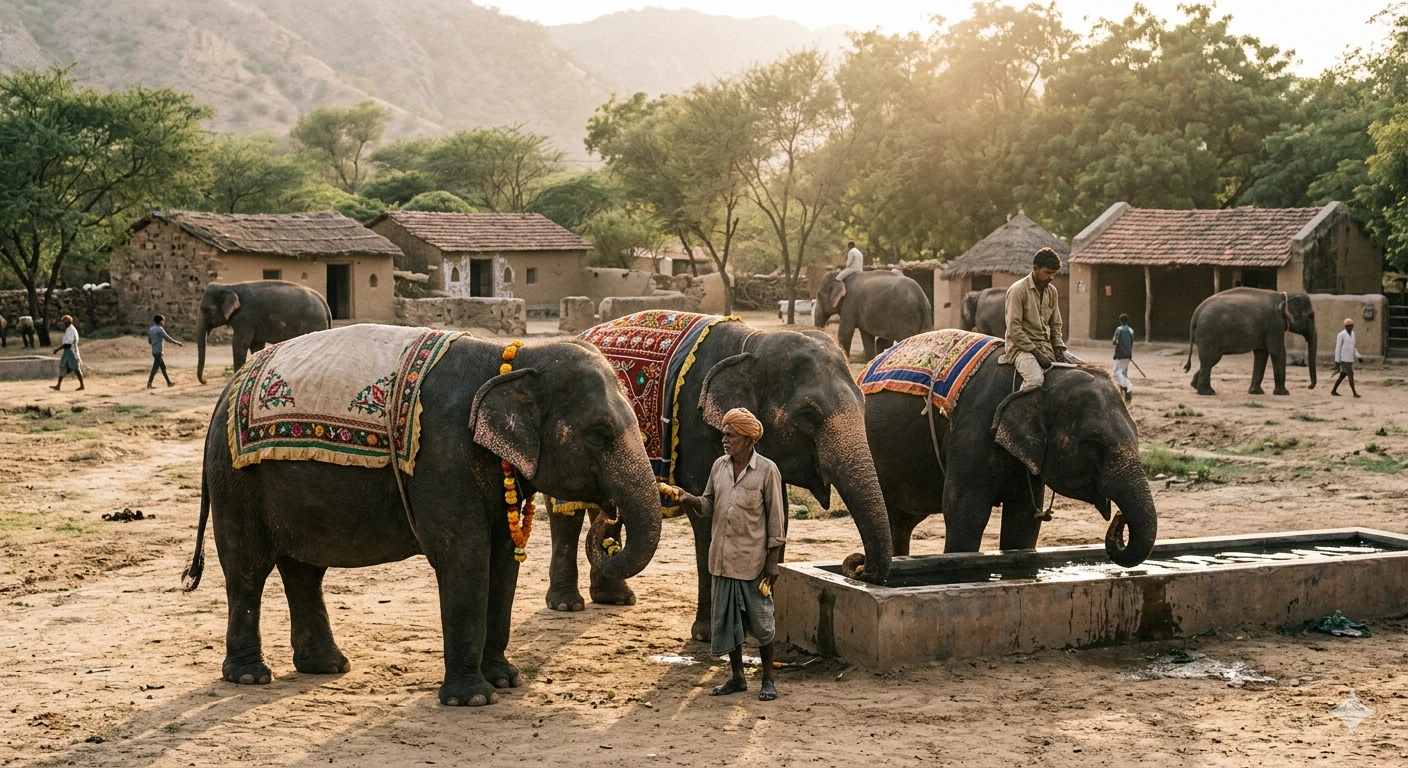
- Elephant Village Amer: Located about a 20–25 minute drive from Birla Mandir Jaipur, this ethical elephant sanctuary near Amer offers a unique chance to interact responsibly with elephants. Visitors can enjoy activities like feeding, walking alongside elephants, and learning about their daily care and conservation. It’s a popular stop for those seeking a meaningful wildlife experience along with Jaipur’s cultural attractions.
- Moti Doongri (Moti Dungri) Ganesh Temple: Just a 5-minute walk uphill from Birla Mandir. This small hilltop temple to Lord Ganesha dates to the 18th century, and offers panoramic city views. Tourists often visit both temples together.
- Albert Hall Museum: A grand Indo-Saracenic museum in Ram Niwas Bagh, only ~10–15 minutes by car. It’s known for its architecture and historical exhibits.
- City Palace & Hawa Mahal: The famed pink sandstone palaces of Jaipur are about 4–5 km away (20–25 min drive). If you have a full day, you can visit Birla Mandir in the evening (for sunset or aarti) after touring the Palace, Hawa Mahal, Jantar Mantar, etc.
- Nahargarh and Jaigarh Forts: These hilltop forts lie on the Aravalli ridge visible from Birla Mandir. Nahargarh Fort is about 15 min by road. You can time a visit for sunset.
- Shopping and Bazaars: The vibrant bazaars of Johari and Bapu are in the old city, within 4 km. Many visitors shop there during the day and end their evening with the calm of Birla Mandir.
Itinerary Tip: For a half-day excursion, try Birla Mandir + Moti Doongri + Albert Hall in the morning or late afternoon. For a balanced full day, do the old-city palaces in the morning, then Birla Mandir at sunset to wind down. (No matter how you plan it, Birla Mandir offers a serene contrast to Jaipur’s busy forts and markets.)
Accessibility & Facilities
Birla Mandir is relatively accessible to all visitors. There are ramps that allow wheelchair access up to the temple area and flat walkways around the grounds. The marble courtyard is mostly level with gentle steps up to the platform.
Facilities include public restrooms near the entrance. There are also drinking water taps inside; however, it’s wise to carry your own water bottle in Jaipur’s dry climate. The temple lawns and benches provide shady spots to sit and rest. Security personnel are present at the gate to ensure safety.
Nearby, small shops at the temple’s base sell offerings (flowers, incense, prasad) and handicrafts. The on-site museum (within the temple complex) displays Birla family artifacts and historical photos, which you can visit during open hours. Overall, the premises are clean and well-maintained.
Safety Tips & Local Customs
Jaipur and the temple area are generally safe for visitors. Use common-sense precautions: keep an eye on personal belongings (especially in crowded areas) and avoid carrying large sums of cash. Dress modestly as noted, and be mindful of local customs: it is respectful to speak softly and observe silence in prayer areas.
Cultural tip: Hindus often raise the right hand in blessing at the darshan (viewing of the deity). It’s polite not to point your feet at the idols. Photography rules must be followed to maintain the sanctity of the shrine. Always cooperate with temple staff and volunteers, who are friendly and can answer questions.
Health tip: Jaipur’s air is dry and sunny. If visiting around midday in any season, wear sunscreen and a hat. In winter, bring a light shawl or sweater, as marble floors and nights can be chilly. Always carry water, and wear comfortable shoes (you will be walking and climbing a few steps).
Packing & What to Carry (Checklist)
- Water bottle: Stay hydrated (Jaipur is arid).
- Sun protection: Hat, sunglasses, and sunscreen for daytime visits.
- Modest attire: Keep shoulders and knees covered (a scarf or shawl can be handy).
- Comfortable shoes: Easy to slip on/off (you must remove them at the temple entrance).
- Light sweater/shawl: If visiting in winter evenings.
- Camera/phone: Allowed outdoors (note: no flash or photos inside).
- Cash: Small change for offerings or temple donations.
- Hand sanitizer/wipes: For hygiene after crowds or before eating.
FAQs
What are the opening hours and entry fee for Birla Mandir Jaipur?
The temple is open daily from 8:00 AM–12:00 PM and 4:00 PM–9:00 PM. There is no entry fee.
Is there a dress code for visitors?
Yes. You should wear modest clothing – cover shoulders and knees (no shorts or sleeveless tops). Footwear must be removed before entering the temple building.
Can I take photos inside the temple?
No. You may photograph the exterior, courtyard, and gardens freely, but photography is not allowed inside the inner sanctum. Please respect this rule and turn off flash near the idols.
How do I reach Birla Mandir by public transport?
The temple is central and well-connected. Jaipur city buses stop nearby, and auto-rickshaws or cycle-rickshaws can easily drop you at the temple gate. The nearest railway station (Jaipur Junction) is about 5 km away, and Jaipur Airport is ~13 km away. Taxis or app-cabs to the temple take under 30 minutes from either.
Is Birla Mandir accessible for disabled visitors?
Yes, there are wheelchair-accessible ramps up to the temple area, and wide pathways on the grounds. Restrooms are available, and staff can assist if needed. The temple tries to accommodate all visitors respectfully.
Conclusion
Birla Mandir is a must-see landmark in Jaipur, offering peaceful beauty and cultural depth. With its striking white marble and harmonious architecture, the temple provides both a spiritual experience and a breathtaking photo opportunity. Best of all, it’s free and centrally located, fitting easily into any Jaipur itinerary. Whether you visit for quiet contemplation at sunset or to admire the intricate carvings in daylight, Birla Mandir Jaipur promises a memorable and serene experience.