
Jagat Shiromani Temple is a 17th-century Hindu shrine at Amer (Amber) Fort in Jaipur. Commissioned by Queen Kanakwati (wife of Man Singh I) between 1599–1608 as a memorial for her son Jagat Singh, Jagat Shiromani Temple, also known as Meerabai Mandir, uniquely enshrines Lord Krishna, the saint-poet Mirabai, and Lord Vishnu. Legend says it houses the very idol of Krishna once worshipped by Mirabai.
Its exquisite Nagara-style architecture (sandstone and marble) features an ornate monolithic toran (gateway arch) flanked by carved elephant pillars. A hidden gem often visited en route to nearby Amber Fort, Jagat Shiromani offers rich history, artful carvings, and spiritual heritage in one spot.
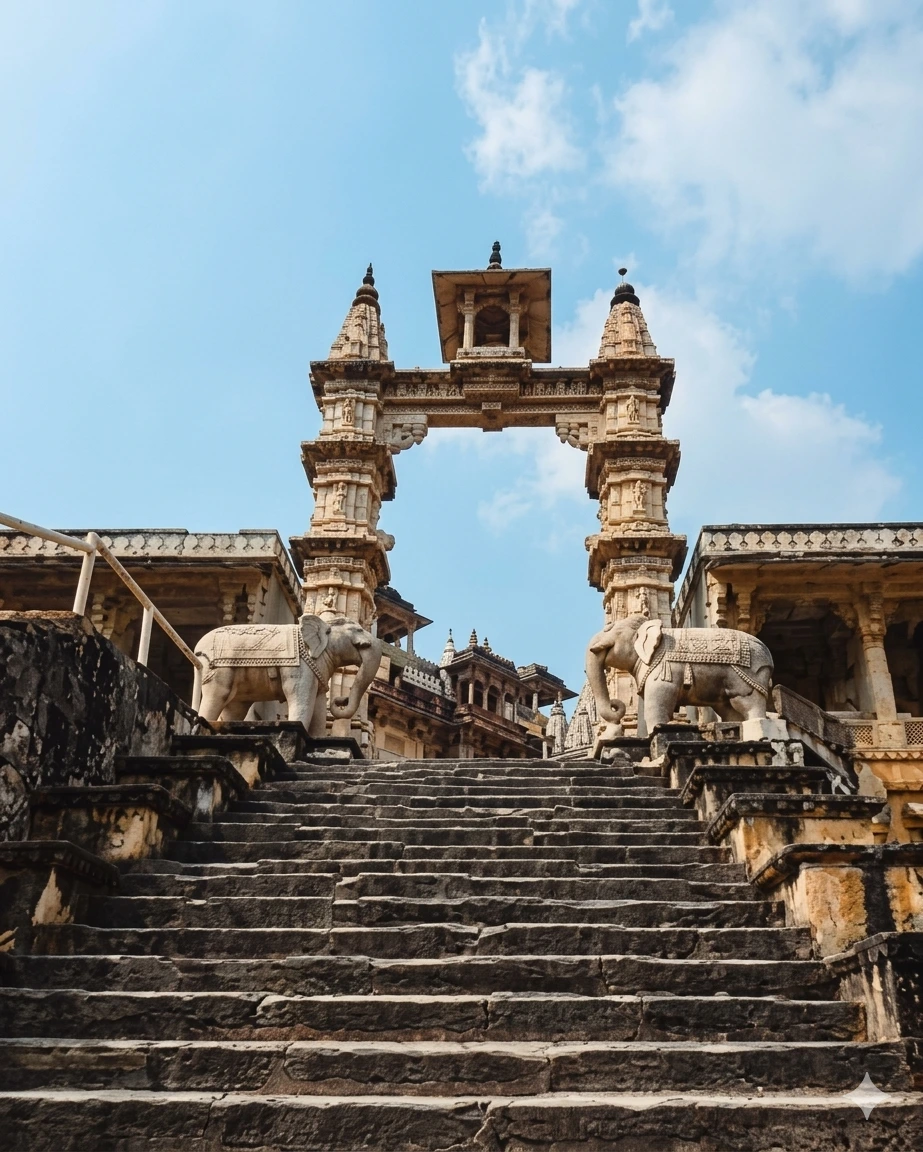
Jagat Shiromani Temple’s main entrance (toran), a carved marble arch flanked by elephant pillars. The temple sits at the base of Amber Fort in Amer, Jaipur. (Ideal shot: from temple courtyard looking up at the arch and fort beyond, in daytime.)
History & Deities
Jagat Shiromani Temple was built from 1599 to 1608 by Queen Kanakawati, wife of Jaipur’s King Man Singh I. It commemorates their young son Maharaja Jagat Singh (who died in 1599) and is named “jagat shiromani” meaning “jewel of the universe”. Unlike most Hindu temples, it combines devotions to Krishna and Meera Bai (along with Lord Vishnu) in one complex.
In fact, local tradition holds that Raja Man Singh I brought Mirabai’s beloved Krishna idol from Chittorgarh to Amer for safekeeping during Mughal wars, and it was later consecrated here. The result is a rare symbol of the Meera–Krishna spiritual union, making it the only major temple where the 16th-century Rajput saint-poet Mirabai is worshipped with Krishna. The temple complex (maintained by the Archaeological Survey of India) even has a shrine to Lord Narsingh (the local Narasimha temple is adjacent) and shares space with a stepwell (Panna Meena Kund) – relics of old Amer town life.
The story of Meera Bai adds to its devotion: she was a princess-turned-saint who sang bhajans to Krishna. According to legend (and a modern plaque), the same idol of Krishna she worshipped was saved from Delhi’s turmoil and installed here, so visitors can see a piece of her legacy.
Architecture & Artistry
The temple is renowned for its exquisite architecture and carvings. It blends traditional North Indian (Nagara) temple layout with Mughal and Jain influences. The entrance toran (arches) is carved from a single marble block, featuring intricate floral and deity motifs. Two life-size elephants (now weathered) flank the steps up to this porch.
Inside, the double-storied assembly halls and garbhagriha (sanctum) boast lavish stone columns and domes carved with Hindu gods, musicians, and animals. The craftsmanship is evident in every corner: the ceilings hold mirror-like glasswork and fresco remnants, the floors rise via ornate stone steps, and relief friezes depict musicians, women, and mythology all around.
In fact, the temple was noted even by one visitor as “built using different stones a unique amalgamation with very intricate carvings”.
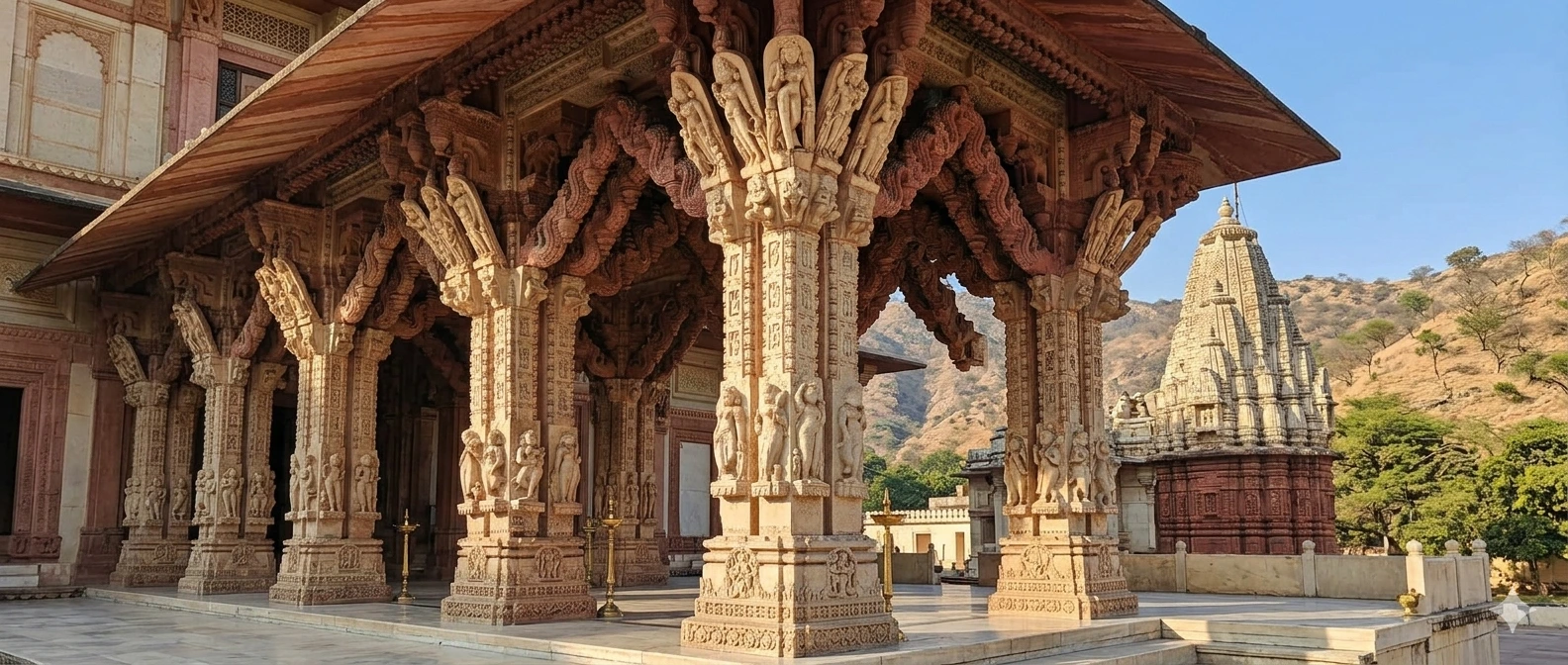
As you enter, look for the garuda statue by the inner shrine (Krishna’s mount), the mirror-studded ceiling, and the pair of stone idols – Krishna and Meera side by side. The outer walls even bear a procession of horses and trumpeting elephants carved in relief. In short, Jagat Shiromani is a masterpiece of Rajput era art, often compared to a smaller-scale sibling of more famous temples – and for that reason it stands out as a must-see for architecture lovers.
Visiting Information
Location & Getting There: Jagat Shiromani Temple sits in the village of Amer (Amber), about 11 km east of Jaipur city center. It’s right off Amer Road, just below the Amber Fort complex. The address is Devisinghpura, Amer Road, Jaipur 302028.
A convenient landmark is the Amer Fort back entrance: follow the small road by Jagat Shiromani up to the fort (local signage often points the way). Public buses (Route #5 from Hawa Mahal or City Palace) go to Amer town. From central Jaipur, take a taxi/auto (₹200–300) or use a ride-hailing app. By Jaipur Metro, the nearest stop is Chandpole (pink line); from there one must take a taxi via Amer Road (no direct metro to Amer).
Parking is available near Maota Lake at Amber Fort’s base, or small informal lots by the temple (arrive early, as it fills up by mid-morning). Because Amer town’s lanes are narrow, drivers often prefer dropping visitors at Jagat Shiromani and returning to pick them up later.
Opening Hours & Timings: The temple is open daily in two shifts (common for Hindu temples): typically early morning to midday, then evening. For example, many sources cite hours around 6:00–1:00 and 4:00–8:00 (Jaipur Metro info says 5–12 & 4–9). It may close briefly at midday. Hours can vary slightly on festival days, so check locally. Best visited in the cool morning or late afternoon to avoid the heat.
Entry Fee & Tickets: No ticket or entry fee is charged. You can enter freely it’s a working temple, so just follow the usual temple routine. There’s no need (or option) to book online. A small dakshina donation box is available if you wish, but it’s entirely voluntary. (One guide notes that foreign visitors should follow Hindu temple customs, as “no fee” implies normal temple etiquette.)
Dress Code & Etiquette: Dress and behave respectfully. Visitors are expected to remove shoes before entering the inner sanctum. Modest clothing (covering knees and shoulders) is appreciated.
Avoid loud behavior or photography of worshippers without permission. Like other Hindu temples, non-Hindus should refrain from stepping beyond the threshold of the idol sanctum. Footnote: As one reviewer noted, “no fee, but for Non-Indians, all customs that are followed in other temples need to be followed”. The resident priest is friendly: you can politely ask him about the temple’s history and he’ll often explain local legends.
Photography & Videos: Tourist photography is generally allowed. You may freely take photos of the temple’s architecture and exterior. Casual picture-taking inside the hallways and around the shrine is usually tolerated. (However, always ask the priest first before photographing the idols directly.)
One travel guide warns that while photography is free, filming videos (especially of rituals) might incur a separate charge. As a courtesy, do not use flash on the deities, and avoid filming prayers. Note that commercial tour groups might pay for “video permission,” but lone visitors typically shoot on their own with no fee.
Best Time to Visit: Rajasthan’s summers (April–June) are very hot; winter months (October–March) have the nicest weather for sightseeing. Early mornings (around 8–10 AM) are calmest. The evening aarti (around 6–7 PM) is also enchanting.
many travelers praise the golden light at dusk, with lamps lit inside the temple. In particular, visiting between 6–8 PM offers a “compelling…golden light” experience, as the temple facade glows at sunset. On festival days (especially Janmashtami in August/September), the temple draws large crowds for special bhajans and prayers, which can be a joyous time to see it decorated and in full worship.
Nearby Attractions & Suggested Itinerary
Jagat Shiromani is often paired with other Amer-area sights. Its location makes it easy to include in a half-day or full-day tour of Amer (as one guide suggests, combine the Amer Town walk with Amber Fort).
A popular walking route is Panna Meena Ka Kund (stepwell) – Laxmi-Narayan (Bihari) Temple – Ambikeshwar (Shiva) Temple – Jagat Shiromani – then up to Amber Fort. This loop (Amer old town walk) takes about 2–3 hours. After the temple, most visitors head up the cobbled path to Amber Fort (Just below the hilltop fort). Combining the town walk with the fort makes for a full satisfying day in Amer.
If you have extra time, also consider Panna Meena Stepwell (a beautiful geometric well just opposite Jagat Shiromani); Jaigarh Fort (higher on the hill, famous for big cannons); Nahargarh Fort (sunset panorama over Jaipur); and Jal Mahal (the “Water Palace” on Man Sagar Lake). Many tourists skip those further sights, but they enrich the area itinerary.
Birla Mandir Jaipur
After exploring Amer, you can head towards Birla Mandir Jaipur, one of the most peaceful temples in the city. Built with white marble, this temple is dedicated to Lord Vishnu and Goddess Lakshmi. The calm atmosphere, intricate carvings, and beautifully lit surroundings in the evening make it a perfect place to relax after a day of sightseeing. It’s especially recommended to visit during sunset when the temple looks stunning and less crowded.
Elephant Park Jaipur (Hathi Gaon)
You can also include a visit to Elephant Park Jaipur, located near Amer. This place offers a unique and ethical experience where visitors can interact with elephants, learn about their care, and enjoy activities like feeding and walking alongside them. It’s a great addition for families and animal lovers looking for a different kind of cultural experience in Jaipur.
Itinerary Tip: The Amer Town walk and Amber Fort entrance are easier to navigate early. A practical sequence is reach Amer town in the morning, visit the stepwell and local temples first, then Jagat Shiromani by late morning, have lunch, then explore Amber Fort in the afternoon. According to a guide, doing the town walk before the fort “makes the fort itself far more meaningful”. A half-day of town followed by 1–2 hours at the fort is commonly recommended.
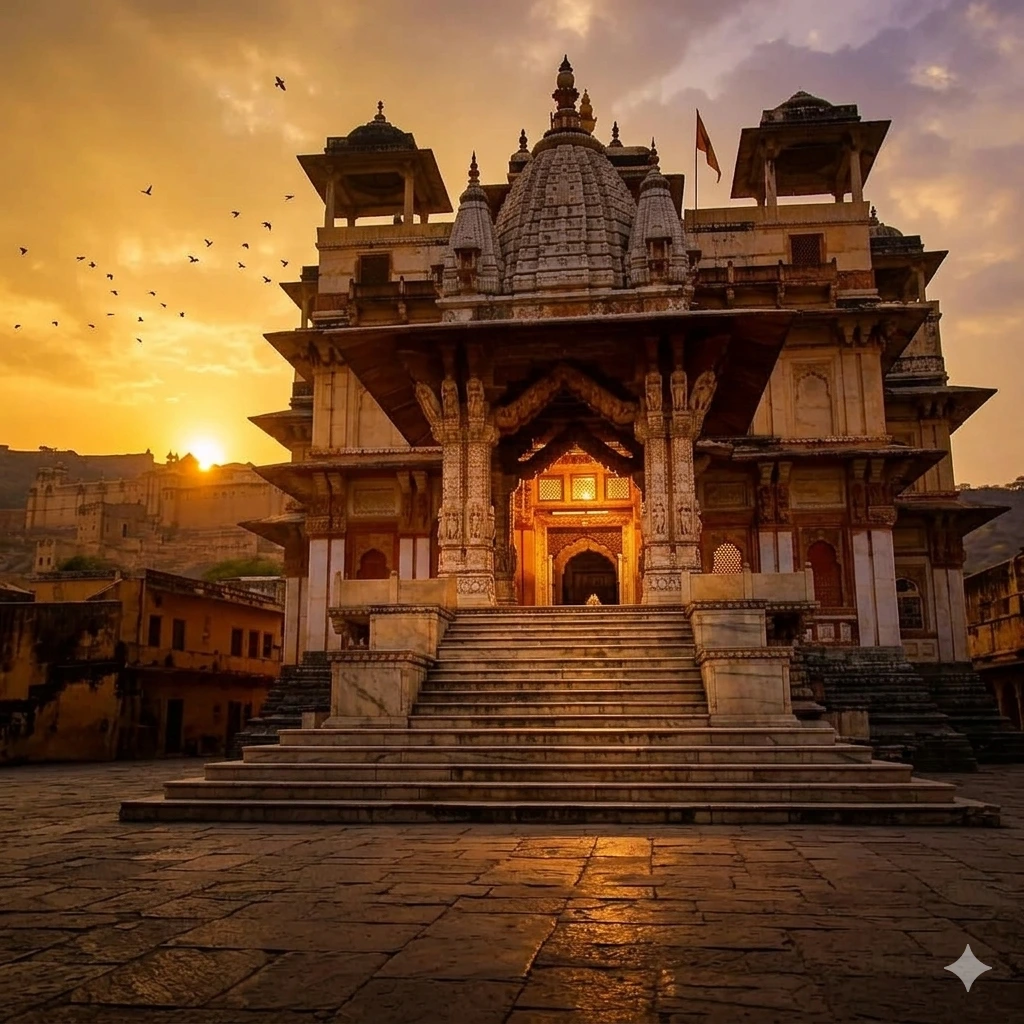
Sunset at Jagat Shiromani Temple. The carved marble entrance glows as the sun sets behind it.
Facilities & Accessibility
The temple complex is fairly basic. There are no dedicated visitor centers, but an ASI guard and resident priest manage the site. A small donation box and some flower stalls are near the entrance. Parking: As noted, public parking is at Amber Fort’s base (Maota Lake area) or informal lots by the temple.
These fill up by mid-morning, so arrive early if self-driving. Restrooms No toilets are provided on the temple grounds. Public restrooms are available near Panna Meena stepwell and at the Anokhi Handblock Printing Museum (a 10-minute walk south). Bring water bottles (several guides advise staying hydrated).
Mobility: The temple sits atop a raised platform reached by stone steps (as in the photos). There is no wheelchair access, though children and elders can usually manage the staircase. Guides: No onsite guide stall is present, but local tour guides or priests can explain the temple’s story. Visitors often rely on professional guides (for Amer Fort and town) if detailed history is desired. The knowledgeable priest is known to proudly recount Mirabai’s tale to interested guests.
Safety & Local Tips
Amer and Jaipur are generally very safe for tourists. The Amer town lanes and temple area are well-traveled by locals and visitors during daytime, so petty theft is uncommon. Just exercise normal city caution (watch belongings in crowds, avoid flashing valuables). In Amer, stray animals and motorbikes are possible in the lanes; watch your step and traffic. Inform someone (hotel or friend) if you trek the Amer hills or walls alone, as phone signal can drop on the ridge.
Local tips: Carry enough cash (many smaller shops don’t take cards) and small change. Bystanders frequently ask for tips in temple areas; be gracious but firm if uninterested. The temple priest appreciates a modest dakshina (5–20 INR) after hearing stories. Evening security is light around the temple, so avoid walking alone in Amer town after dark. Otherwise, Amer is a residential community – you’ll see locals going about daily life around the temple.
Food, Shopping & Festivals
Food: Immediately outside the temple and fort, a few stalls sell chai, lassi (sweet yogurt drink), and simple snacks. For a sit-down meal, there are popular spots near Amber Fort’s base. Inside Amber Fort (near Jagat Shiromani) is Cafe Amber for quick bites. Just outside, Laal Maas Jaipur offers a famous Rajasthani thali (vegetarian-unlimited). Jaipur Cooking is an Italian/Asian cafe nearby if you crave something different. Closer to Jaipur city, the Amer Road (on the way back) has small dhabas and restaurants serving local dishes like dal baati churma or meat curries.
Shopping: Amer town has only a few handicraft stalls catering to tourists (brass idols, textiles). For real shopping, plan to visit Jaipur markets in the city center (Johari Bazaar for jewelry, Bapu Bazaar for textiles and mojris, etc.). However, near Amer: the Anokhi Hand Printing Museum (15 min walk) has a lovely shop selling block-printed textiles, clothing and souvenirs (the museum is closed Mon). Amber Fort’s market area also has a handful of shops (pottery, gems).
Festivals: The temple lights up for major Hindu festivals. Chief among these is Janmashtami (Krishna’s birthday, August/Sept): special pujas and bhajans draw crowds. Local devotees gather after sunset for Krishna kirtan. Mirabai Jayanti (celebrating saint Mirabai, usually during monsoon season) may see recitations of her songs. During Sharad Purnima or Diwali, you might find the temple decorated with lamps. If you plan to visit on a festival day (especially Janmashtami), arrive early to avoid very large crowds during the evening ceremony. The rest of the year, expect a quiet devotional atmosphere – often you’ll have most of the temple to yourself outside peak hours.
Suggested Itinerary (Half/Full-Day):
- Morning: Arrive at Amer by 8 AM. Begin with Panna Meena Stepwell (300 m from Jagat Shiromani). From there walk the Amer Town trail: visit Bihari Ji (Laxmi Narayan) Temple, Ambikeshwar Mahadev Temple, then reach Jagat Shiromani by 10–11 AM.
- Noon: Explore Jagat Shiromani’s halls and shrines (30–45 min). Climb up and admire the carvings; converse with the priest if he’s present.
- Lunch: Enjoy local fare near Amer (Rajasthani thali or cafes).
- Afternoon: Proceed up to Amber Fort (stone path from town or rear entrance). Spend the afternoon touring Amber Fort’s palaces and courtyards. (Fort tickets are separate; plan 2–3 hours.)
- Evening: Exit Amber Fort via the north, stopping at the temple courtyard again if you wish to see the sunset “aarti”. End by walking around Amber town lanes (shop or see small temples).
This covers Jagat Shiromani and the best of Amer in one day. As one guide sums up: doing Amer Town in the morning, then the fort in the afternoon makes for “a very satisfying full day”.