
Which Park Delivers Better Tiger Photos?
Planning a dedicated wildlife photography trip to India often comes down to one big question: Jim Corbett National Park or Ranthambore National Park? Both are legendary, yet they offer vastly different experiences. With 5 days to spend in November and a budget of approximately ₹50,000, this comprehensive comparison will help you decide which park suits your photography style, expectations, and wallet.
Let's dive deep into Corbett vs Ranthambore – covering landscape, tiger sightings, safari zones, light conditions, budget breakdown, and even nearby tourist places.
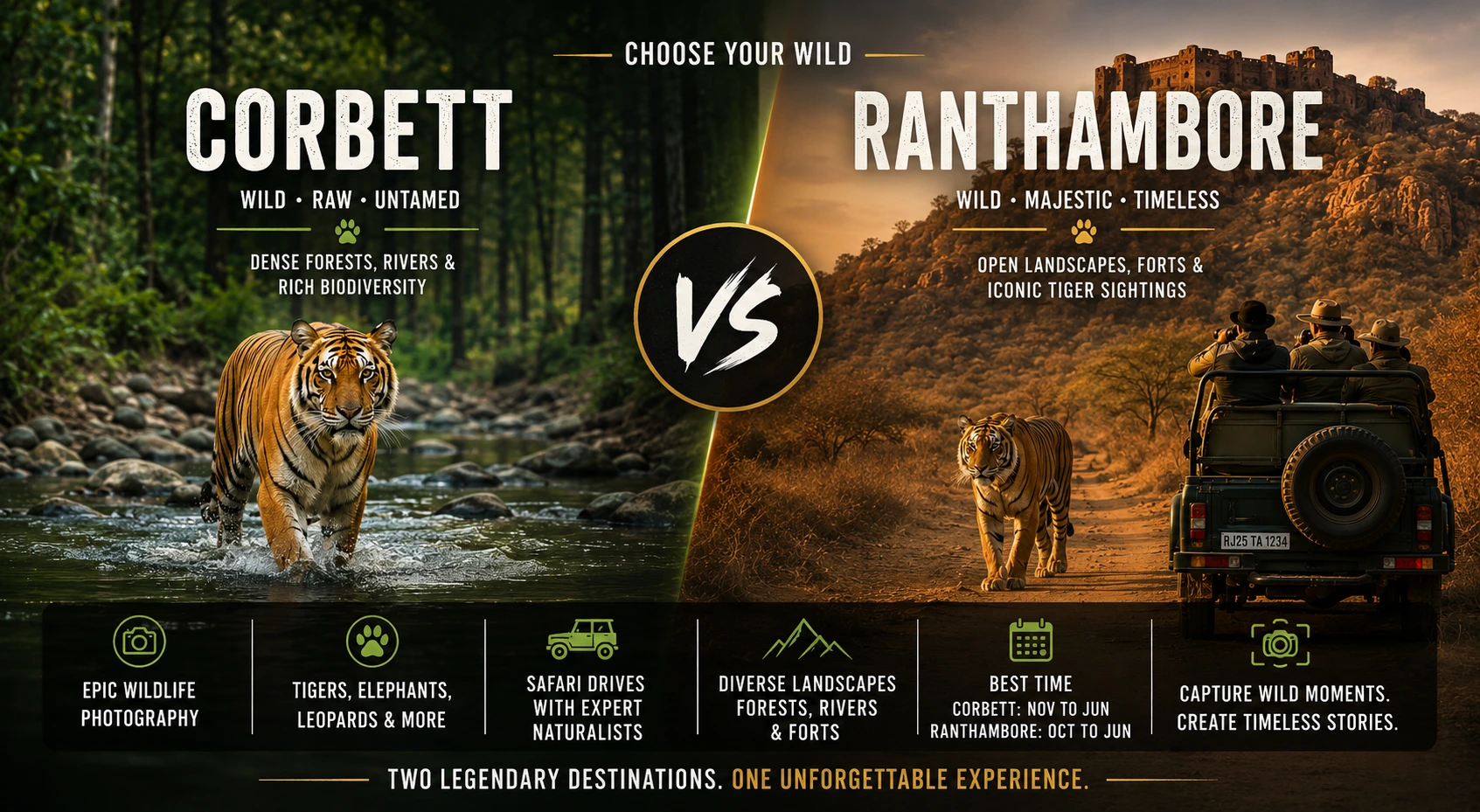
Quick Overview – Corbett vs Ranthambore
| Feature | Jim Corbett National Park | Ranthambore National Park |
|---|---|---|
| Location | Uttarakhand (foothills of Himalayas) | Rajasthan (dry deciduous Aravalli hills) |
| Landscape | Dense forests, rivers, grasslands, misty hills | Open meadows, lakes, ancient ruins, rocky terrain |
| Tiger Sighting Probability | Moderate – harder to spot due to dense foliage | High – open terrain makes spotting easier |
| Best for | Diverse wildlife, birds, dramatic landscapes | Tigers, leopards, sloth bears, consistent results |
| November Weather | Cool (15°C), morning fog possible | Pleasant (18°C–25°C), clear skies |
| Safari Zones | Dhikala, Bijrani, Jhirna, Dhela (multiple) | Zones 1–10 (1-6 most popular) |
| Nearest Railway Station | Ramnagar (12 km to park) | Sawai Madhopur (7 km to park) |
| Budget for 5 days | ₹39,500 – ₹58,000 | ₹36,500 – ₹54,000 |
Landscape & Habitat – How It Affects Your Photography
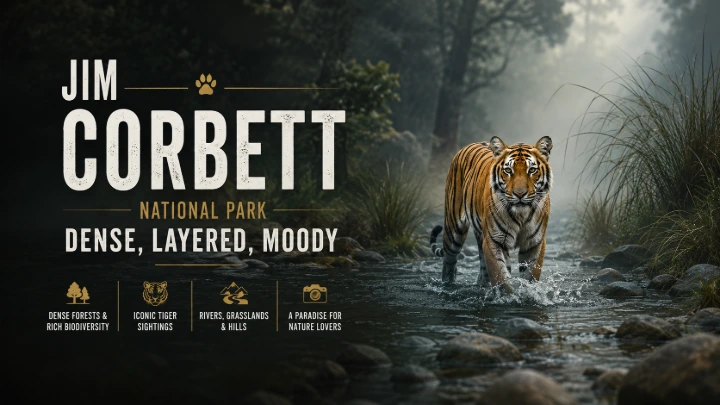
Jim Corbett National Park – Dense, Layered, Moody
Corbett is located in the foothills of the Himalayas. The park features:
– Dense sal forests, tall grasses, and riverbeds
– Misty mornings with fog drifting through trees
– The Ramganga River flowing through the core zone
Photography style here: Dramatic, atmospheric, storytelling. You will capture tigers emerging from mist, elephants wading through rivers, and birds against lush green backdrops. However, the dense foliage means tigers can appear suddenly and disappear quickly – you need fast reflexes and a telephoto lens.
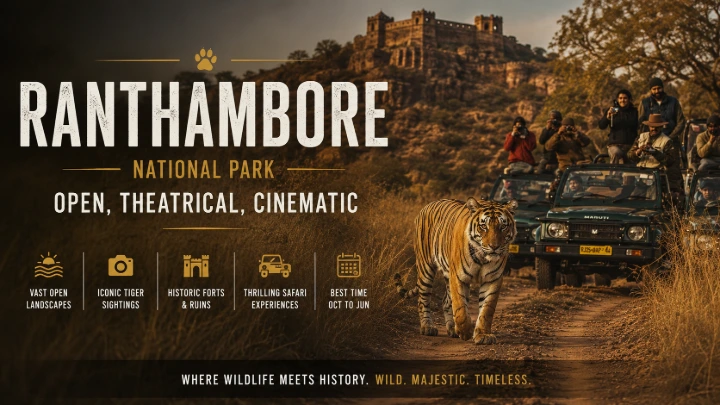
Ranthambore National Park – Open, Theatrical, Cinematic
Ranthambore is situated in Rajasthan's Aravalli range. The terrain includes:
– Dry deciduous forest (trees shed leaves, improving visibility)
– Lakes (Padam Talao, Malik Talao) where animals gather
– Ancient ruins – crumbling chhatris, stepwells, and the 10th-century Ranthambore Fort
Photography style here: Clean compositions, tiger portraits with fort backdrops, golden-hour glory. Because the vegetation is sparse, you often spot tigers from a distance, giving you time to adjust settings and compose your shot. This makes Ranthambore more beginner-friendly.
You can Also Experience: Jhalana Leopard Safari Park

Tiger Sightings & Behavior – Which Park Wins?
Ranthambore Tiger Reserve – High Probability, Daytime Activity
Ranthambore is famous for diurnal tigers (active during the day). The tigers here have grown accustomed to safari vehicles over decades. You will often see them:
– Walking on forest tracks
– Resting near lakes (Padam Talao, Raj Bagh)
– Climbing rocky outcrops for territory marking
Star tigresses: Arrowhead (T-84) is one of Ranthambore's most famous tigresses, known for her distinctive arrow-shaped mark on her forehead. Her final walk (often referred to as the "ranthambore tigress arrowhead final walk" ) became a poignant moment for wildlife photographers – she was last seen in 2022, and her legacy continues. Other notable tigers include Krishna (T-19), Sundari (T-22), and Riddhi (T-124).
Jim Corbett Tiger Reserve – Elusive, Rewarding but Challenging
Corbett's tigers are shyer and more elusive. The park is much larger, and tigers often move deep inside forests. You need patience and persistence. However, when you do spot a tiger in Corbett, the setting (riverbank, forest edge, misty morning) makes for unforgettable, award-winning images.
Famous tigers: Paarwali (the "borderline" tigress), Bijrani tigress, and the majestic male tigers of Dhikala zone.
Verdict for tiger photography: Ranthambore offers higher probability, easier framing, and more predictable sightings. Choose Corbett only if you are comfortable with moderate chances and want to pair tiger photography with birding and landscapes.
Safari Zones – Where to Book for Best Results
Ranthambore National Park Safari Zones
Ranthambore is divided into 10 zones. For a 5-day photography trip in November, target these zones:
| Zone | Best For | Tiger Density | Notes |
|---|---|---|---|
| Zone 1 | Lakeside tiger sightings | High | Padam Talao, good for crocodiles and water birds |
| Zone 2 | Tiger cubs, open meadows | Very High | Often closed for maintenance – check before booking |
| Zone 3 | Fort backdrops, open tracks | High | Classic "tiger on the fort wall" photos |
| Zone 4 | Leopards & sloth bears | Moderate | Kachida Valley – rocky terrain |
| Zone 5 | Lahpur area – highest tiger density | Very High | Long waiting lists – book 45+ days in advance |
| Zone 6–10 | Quieter, fewer vehicles | Low to Moderate | Good for avoiding crowds, but fewer sightings |
Booking tip: For a 5-day trip, book Zone 3, 4, and 5 for mornings, and Zone 1 or 6 for evenings. Use the official Rajasthan Forest Department portal: fmdss.forest.rajasthan.gov.in. and wildlife tourism website elephantvillageamer.com
Jim Corbett National Park Safari Zones
Corbett has multiple tourism zones. The most famous for photographers is Dhikala, but it is difficult to book.
| Zone | Best For | Booking Difficulty |
|---|---|---|
| Dhikala | Grasslands, river views, tiger sightings | Very High (opens 45 days in advance, sells out in hours) |
| Bijrani | Dense forest, leopards, deer | High |
| Jhirna | Open year-round, sloth bears, birds | Moderate |
| Dhela | New zone, good for beginners | Moderate |
Booking tip: Corbett permits are managed by the Uttarakhand Forest Department. For November safaris, you must book at least 45 days in advance – especially for Dhikala.
Light Conditions & Weather in November
| Factor | Jim Corbett (November) | Ranthambore (November) |
|---|---|---|
| Average Temperature (morning) | 8°C – 15°C | 15°C – 18°C |
| Daytime High | 18°C – 22°C | 25°C – 28°C |
| Morning Visibility | Fog/mist possible (clears by 9 AM) | Clear skies, minimal haze |
| Golden Hour Quality | Soft, diffused (dreamy) | Warm, sharp (dramatic) |
| Best Time Within Safari | 6–8 AM for mist shots | 7–9 AM for golden light |
Which is better for photography? Ranthambore offers consistent, predictable light – ideal for sharp tiger portraits. Corbett offers creative opportunities with mist and fog, but you may lose visibility in early morning safaris.
Complete Budget Breakdown – 5-Day Trip Under ₹50,000
We provide detailed budget information. Here is a consolidated, realistic breakdown for November 2026.
Ranthambore National Park – Estimated Costs
| Expense Item | Low Budget (₹) | Mid Budget (₹) | Notes |
|---|---|---|---|
| Accommodation (4 nights) | 8,000 – 10,000 | 12,000 – 16,000 | Forest rest house vs private resort |
| Safari Tickets (6 slots – jeep) | 9,000 – 12,000 | 12,000 – 15,000 | ₹1,500–2,500 per safari per person |
| Train from Delhi (return) | 2,000 – 3,000 | 3,500 – 5,000 | Jaipur or Delhi to Sawai Madhopur |
| Local Transport (auto/cab) | 1,500 – 2,000 | 2,000 – 2,500 | Station to hotel and safari gate |
| Meals (5 days) | 2,500 – 3,500 | 3,500 – 5,000 | Local dhabas vs hotel restaurants |
| Guide / Naturalist (optional) | 3,000 – 4,000 | 5,000 – 7,000 | Worth it for first-timers |
| Total (approx) | ₹26,000 – ₹34,500 | ₹38,000 – ₹50,500 | Comfortably within ₹50,000 |
Jim Corbett National Park – Estimated Costs
| Expense Item | Low Budget (₹) | Mid Budget (₹) | Notes |
|---|---|---|---|
| Accommodation (4 nights) | 12,000 – 14,000 | 15,000 – 20,000 | Dhikala forest rest house costs more |
| Safari Tickets (6 slots – jeep) | 12,000 – 15,000 | 15,000 – 18,000 | Higher demand, higher cost |
| Train from Delhi (return) | 2,500 – 3,500 | 4,000 – 6,000 | Delhi to Ramnagar |
| Local Transport | 2,000 – 2,500 | 2,500 – 3,500 | Ramnagar to different zones |
| Meals (5 days) | 3,000 – 4,000 | 4,000 – 6,000 | Limited options inside forest zones |
| Guide / Naturalist | 3,000 – 4,000 | 5,000 – 8,000 | Mandatory in some zones |
| Total (approx) | ₹34,500 – ₹43,000 | ₹45,500 – ₹61,500 | Can exceed ₹50,000 if booking Dhikala |
Key takeaway: Ranthambore is more budget-friendly and easier to plan within ₹50,000. Corbett can fit the budget if you choose Bijrani or Jhirna zones instead of Dhikala, and stay in budget lodges.
Travel Accessibility – Getting There
Ranthambore National Park
Nearest railway station: Sawai Madhopur Junction (SWM) – well-connected from Delhi, Jaipur, Mumbai.
From Delhi: Train takes 4–5 hours (e.g., Golden Temple Mail, Ranikhet Express).
From Jaipur: Train takes 3–4 hours (many daily trains).
From station to park: Taxi or auto (₹300–500) to your hotel and safari pickup point.
Jim Corbett National Park
Nearest railway station: Ramnagar (RMR) – connected from Delhi, Moradabad, Lucknow.
From Delhi: Train takes 5–6 hours (e.g., Corbett Link Express, Ranikhet Express).
From Ramnagar to different zones: Taxi required – Dhikala is 30 min from Ramnagar; Bijrani is closer.
Verdict: Ranthambore is easier to reach from major cities, especially if you are combining with Jaipur or Delhi. Corbett requires more planning and internal transfers.
Nearby Tourist Places Extend Your Trip
Both parks are located near interesting cultural and natural attractions. If you have extra days or want to combine sightseeing with photography:
Near Ranthambore National Park
| Place | Distance | Why Visit |
|---|---|---|
| Ranthambore Fort | Inside park | UNESCO site, Trinetra Ganesh Temple, panoramic views |
| Sawai Madhopur Town | 7 km | Local markets, Rajasthani food |
| Khandar Fort | 25 km | Less-crowded hill fort, great for sunset photography |
| Baran (Bhand Devra Temple) | 149 km | Ancient temple with intricate carvings |
| Kota | 145 km | Chambal Garden, Kota Garh, Dussehra fair (October) |
| Jaipur | 180 km | Pink City – Amber Fort, Hawa Mahal, City Palace |
Near Jim Corbett National Park
| Place | Distance | Why Visit |
|---|---|---|
| Corbett Waterfall | 20 km | Beautiful cascading waterfall – good for nature photography |
| Garjiya Temple | 15 km | Ancient temple on a rock beside river |
| Sitarganj | 40 km | Lesser-known birding spot |
| Nainital | 65 km | Hill station – boating, lake views, colonial architecture |
| Jim Corbett Museum (Kaladhungi) | 25 km | Housed in Corbett's former bungalow – historical exhibits |
| Ranikhet | 90 km | Quiet hill station with Himalayan views |
5-Day Itinerary for Each Park
5-Day Wildlife Photography Trip – Ranthambore (Recommended for Tiger Focus)
Day 1: Arrive Sawai Madhopur (morning train from Delhi/Jaipur). Check into hotel near the park. Rest and gear preparation. Evening safari (Zone 6 – quieter, get oriented).
Day 2: Morning safari (Zone 4 – Kachida Valley for leopards/sloth bears). Afternoon rest, photo editing. Evening safari (Zone 1 – Padam Talao for lakeside tiger).
Day 3: Full day safari (Zone 5 – Lahpur area, highest tiger density). Packed lunch inside the park. Back by sunset.
Day 4: Morning safari (Zone 3 – classic fort backdrop). Afternoon visit to Ranthambore Fort and Trinetra Ganesh Temple. Evening safari (Zone 2 – if open).
Day 5: Final morning safari (Zone 1 or 3, whichever had best sightings). Depart by afternoon train.
Total safaris: 7 slots. Estimated cost within ₹50,000.
5-Day Wildlife Photography Trip – Corbett (Diverse Subjects)
Day 1: Arrive Ramnagar (train from Delhi). Transfer to hotel. Briefing with guide.
Day 2: Morning safari (Dhikala zone – if you managed a booking). Focus on river landscapes and tiger spots. Evening safari (Bijrani zone).
Day 3: Morning safari (Dhikala again – best chance for tigers). Afternoon rest or bird photography near the river.
Day 4: Morning safari (Jhirna zone – open year-round, good for sloth bears and birds). Evening safari (Dhela zone – newer, less crowded).
Day 5: Final morning safari (Bijrani or Dhikala). Depart by afternoon.
Note: Corbett requires very early booking (45+ days) for Dhikala. If you cannot get Dhikala, focus on Bijrani and Jhirna – they still offer good sightings.
Photography Gear & Field Techniques
For both parks, carry:
Camera body: Two bodies preferred (one with telephoto, one with wide-angle).
Lenses: 150–600mm or 100–400mm for tigers; 24–70mm for landscapes and fort shots.
Tripod/monopod: Useful for early morning low light but not allowed on safari gypsies (handheld only).
Beanbag: Essential for steady shots from the jeep.
Lens cloth & blower: Dust in Ranthambore, moisture in Corbett.
Extra batteries and memory cards – safaris last 3–4 hours, and you will shoot continuously.
Camera settings for tiger photography:
Shutter priority (1/800 – 1/1600 for walking tiger; 1/250 for resting)
Auto ISO (limit to 3200–6400 depending on your camera)
Continuous autofocus (AF-C) with back-button focus
Burst mode (high-speed continuous)
Which Park Should You Choose? Final Verdict
Choose Ranthambore National Park if:
Your primary goal is tiger photography with high probability of sightings.
You want consistent, sharp images with clear visibility.
You prefer easier booking and lower costs within ₹50,000.
You like fort ruins and lakes as natural backdrops.
You are a beginner or intermediate wildlife photographer.
Choose Jim Corbett National Park if:
You want diverse subjects – tigers, elephants, leopards, birds, river landscapes.
You are comfortable with moderate tiger sighting chances.
You love mist, fog, and dramatic, moody compositions.
You are a bird photographer (Corbett has 600+ species).
You have experience with complex lighting and dense forest conditions.
For most photographers on a 5-day, ₹50,000 budget in November, Ranthambore is the better choice. It offers higher tiger sighting probability, predictable light, and easier logistics. However, if you already have tiger portraits and want to build a diverse portfolio, Corbett will reward your patience with unique, award-winning shots.
Also Experience: Elephant Sanctuary in India
Plan Your 5-Day Wildlife Photography Trip
Both Jim Corbett National Park and Ranthambore National Park offer incredible opportunities for wildlife photography. For a 5-day trip in November on a ₹50,000 budget, Ranthambore is the safer, more reliable choice for tiger photography. Its open terrain, predictable weather, and easier logistics make it ideal for photographers who want consistent results.
However, if you are an experienced photographer seeking diversity – birds, elephants, misty landscapes, and the challenge of elusive tigers – Corbett will not disappoint. Book early, pack your longest lens, and prepare for the adventure of a lifetime.
Which park will you choose? Share your thoughts in the comments below!
Frequently Asked Questions
Q1: Is November a good month for wildlife photography in Corbett or Ranthambore?
Yes – November is one of the best months for both parks. Post-monsoon vegetation has thinned, making tigers easier to spot. Light quality is excellent, with clear skies and soft golden-hour light in the mornings.
Q2: Which park has better tiger sighting chances in November?
Ranthambore generally has a higher probability of tiger sightings in November due to its open, dry terrain and high tiger density – particularly in Zones 1, 3, 4, and 5.
Q3: Can I do both Corbett and Ranthambore in 5 days?
It is possible – 2 days in Ranthambore and 3 days in Corbett – but the travel time between them is 8–10 hours by train. Most wildlife photographers prefer committing to one park to maximise safari slots and avoid travel fatigue.
Q4: What is the realistic cost of a 5-day wildlife photography trip under ₹50,000?
A 5-day trip including accommodation, 6–7 safari slots, train travel from Delhi, and meals is achievable between ₹36,500 and ₹50,000 for Ranthambore, and ₹39,500–₹50,000 for Corbett (if you avoid the most expensive Dhikala zone).
Q5: How far in advance should I book safaris for November?
At least 45 days in advance. November is peak season – permits for Dhikala (Corbett) and Zone 1/5 (Ranthambore) sell out quickly.
Q6: What is the "ranthambore tigress arrowhead final walk"?
Arrowhead (T-84) was a famous tigress of Ranthambore, named for the arrow-shaped mark on her forehead. Her "final walk" refers to her last known sighting in 2022 before she disappeared – a poignant reminder of the ephemeral nature of wildlife. Her legacy lives on through her cubs (including T-124 Riddhi) and the countless photographs she inspired.
For more travel inspiration, check out our other tours and guides:
Nahargarh Biological Park | Jeen Mata Mandir Sikar | Top 10 tourist places in jaipur | Govind Dev Ji Temple | Jaipur to Bhangarh Fort | Jaipur to Salasar Balaji Distance | Jaipur to Khatu Shyam Distance | Mehandipur balaji temple photos | Birla Mandir Jaipur | Amer Lake Boating | Jal Mahal Jaipur | Panna Meena Ka Kund | Jagat Shiromani Temple Amer | Elephant Park Jaipur (Hathi Gaon) | Elephant Safari in Jaipur | Kids Friendly Places to Visit in Jaipur